CASE STUDY · CARINGBRIDGE

Building a research practice that moved product decisions forward

Building a research practice that moved product decisions forward

Building a research practice that moved product decisions forward

A scalable UX research and testing program that gave CaringBridge teams confidence before committing engineering resources.

A scalable UX research and testing program that gave CaringBridge teams confidence before committing engineering resources.

ROLE

UX Designer & UX Research Lead

UX Designer & UX Research Lead

As CaringBridge evolved through a web redesign, iOS redesign, feature expansion, and platform migration, I became the primary owner of user research and testing across the organization. My goal was to make research a repeatable decision-making practice—not simply a series of usability studies.

As CaringBridge evolved through a web redesign, iOS redesign, feature expansion, and platform migration, I became the primary owner of user research and testing across the organization. My goal was to make research a repeatable decision-making practice—not simply a series of usability studies.

TOOLS · Figma · FigJam · UserTesting.com · Claude AI · Figma AI · iOS prototypes · Responsive web prototypes

THE CHALLENGE

Replacing assumptions with evidence

Replacing assumptions with evidence

When I joined CaringBridge, feedback often arrived through support tickets, stakeholder opinion, or assumptions about behavior. We needed a scalable way to validate ideas before development and answer the questions that mattered: Can people complete the task? Do they understand the language? Where does confusion appear? Are we solving the real problem?

When I joined CaringBridge, feedback often arrived through support tickets, stakeholder opinion, or assumptions about behavior. We needed a scalable way to validate ideas before development and answer the questions that mattered: Can people complete the task? Do they understand the language? Where does confusion appear? Are we solving the real problem?

BUILDING THE PROCESS

A repeatable path from uncertainty to insight

A repeatable path from uncertainty to insight

01 — Define the research question

01 — Define the research question

I partnered with product managers and engineers to identify the biggest uncertainties—such as which navigation performed best, whether language made sense, or whether people could find key support options.

I partnered with product managers and engineers to identify the biggest uncertainties—such as which navigation performed best, whether language made sense, or whether people could find key support options.

02 — Build clickable prototypes

02 — Build clickable prototypes

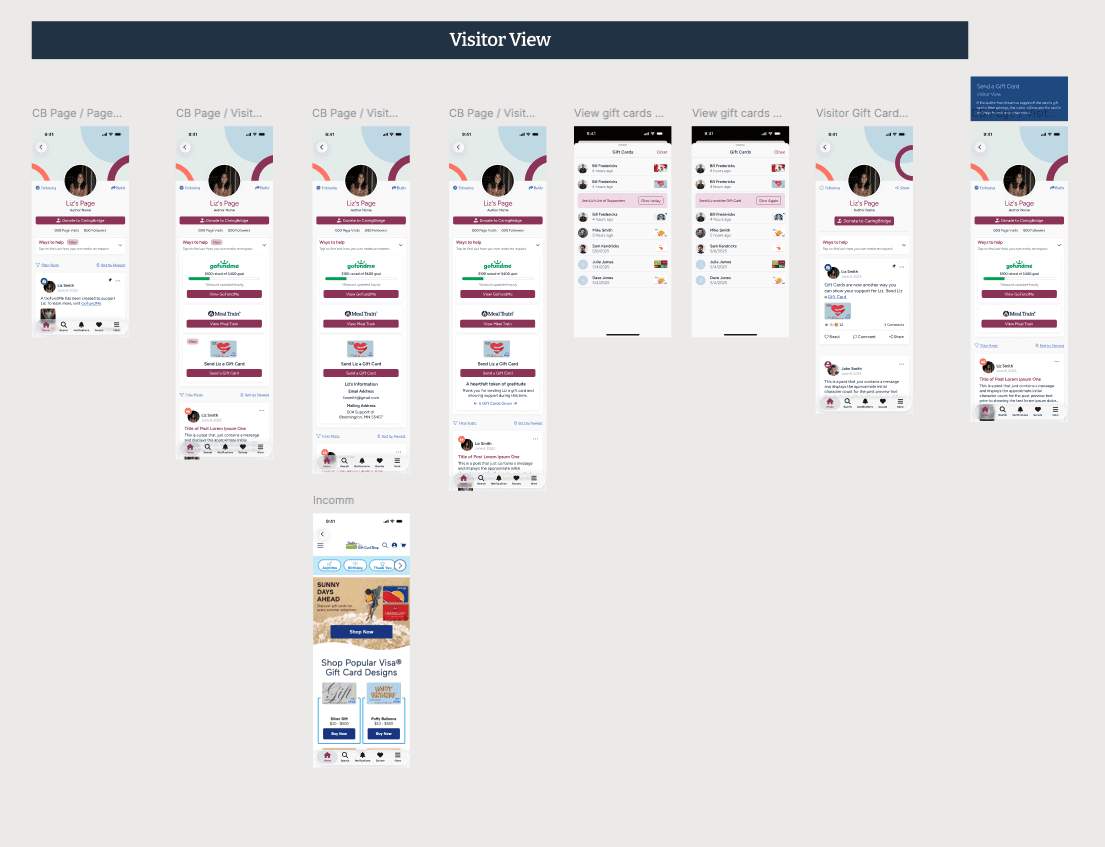
I created high-fidelity Figma prototypes for desktop, responsive web, mobile, and iOS. These realistic flows let participants complete meaningful tasks before engineering began development.

I created high-fidelity Figma prototypes for desktop, responsive web, mobile, and iOS. These realistic flows let participants complete meaningful tasks before engineering began development.

03 — Conduct user studies

03 — Conduct user studies

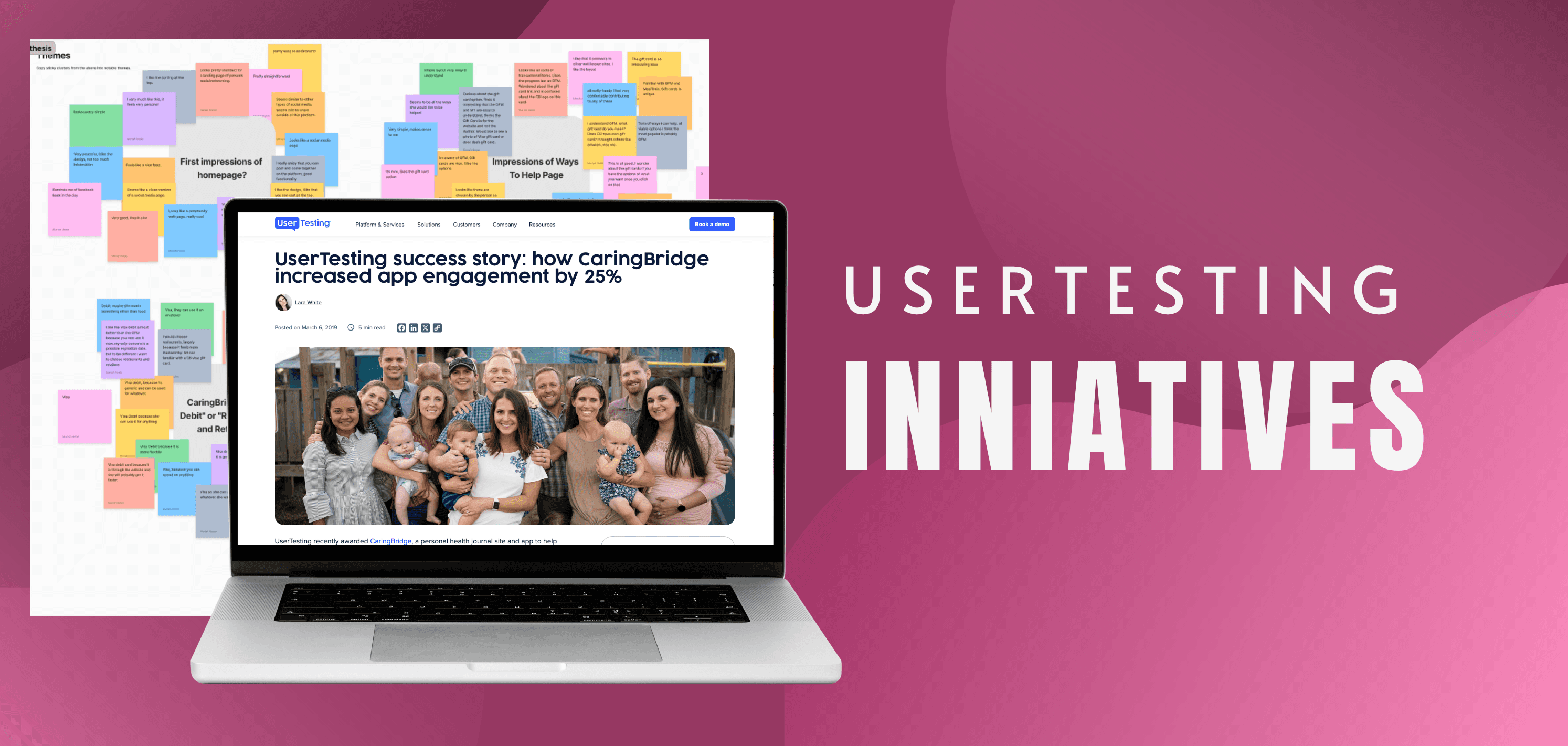
Across many UserTesting.com studies, I used moderated interviews, unmoderated task-based testing, and surveys to observe behavior, clarify intent, validate language, and compare design directions.

Across many UserTesting.com studies, I used moderated interviews, unmoderated task-based testing, and surveys to observe behavior, clarify intent, validate language, and compare design directions.

Moderated

Live conversations, follow-up questions, behavioral observation, and deeper context.

Unmoderated

Task-based usability, first impressions, preference testing, and navigation studies.

Surveys

Quantitative validation, language preference, feature prioritization, and sentiment analysis.

TESTING ACROSS THE LIFECYCLE

Not just prototypes, evidence at every stage

Not just prototypes, evidence at every stage

One unique strength of the program was validating experiences across prototype, beta, and production. This helped uncover real-world friction that analytics alone could not explain and gave teams space to improve the experience before wider migration.

One unique strength of the program was validating experiences across prototype, beta, and production. This helped uncover real-world friction that analytics alone could not explain and gave teams space to improve the experience before wider migration.

MY RESEARCH TOOLKIT

The tools that made insight visible

The tools that made insight visible

UserTesting

Participant recruiting, task creation, video recordings, metrics, and surveys.

Figma + FigJam

Interactive flows, affinity maps, themes, pain points, quotes, and opportunity areas.

AI-assisted synthesis

Claude AI accelerated clustering and summaries; every insight was reviewed and validated with researcher judgment.

TURNING RESEARCH INTO DECISIONS

From participant evidence to shared action

From participant evidence to shared action

Research didn’t end with participant videos. Every study was transformed into actionable recommendations through recording review, pattern identification, usability issue categorization, pain-point prioritization, presentation decks, and cross-functional sharing with product, design, engineering, marketing, and leadership.

Research didn’t end with participant videos. Every study was transformed into actionable recommendations through recording review, pattern identification, usability issue categorization, pain-point prioritization, presentation decks, and cross-functional sharing with product, design, engineering, marketing, and leadership.

The result was a practical research culture: teams could bring their biggest questions forward, test before building, and make decisions with more confidence and less reliance on assumption.

KEY TAKEAWAYS

Research changed how we made product decisions

Research changed how we made product decisions

This work fundamentally changed how our team approached product decisions.

This work fundamentally changed how our team approached product decisions.

Instead of asking, “What do we think users want?”

we began asking, “What did users actually tell us?”

By embedding research throughout the product lifecycle—from early concepts to production experiences—we created a more user-centered design process that reduced uncertainty, improved collaboration, and led to more confident product decisions.

By embedding research throughout the product lifecycle—from early concepts to production experiences—we created a more user-centered design process that reduced uncertainty, improved collaboration, and led to more confident product decisions.

LET’S CONNECT

Let’s make meaningful experiences together.

Open to thoughtful product design conversations, collaborations, and new opportunities.

LET’S CONNECT

Let’s make meaningful experiences together.

Open to thoughtful product design conversations, collaborations, and new opportunities.

LET’S CONNECT

Let’s make meaningful experiences together.

Open to thoughtful product design conversations, collaborations, and new opportunities.